
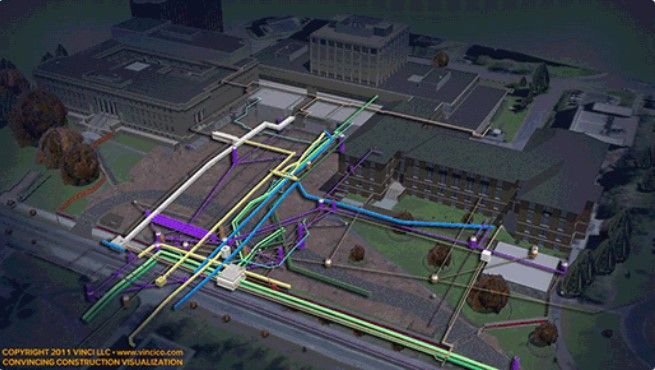
Investigating What Lies Beneath the Surface
Underground problems are often difficult to identify without opening the ground. Unknown utilities, damaged pipelines, hidden leaks, blockages, and subsurface defects can create major risks during construction and maintenance work.
Bolthooks Technical Services provides underground diagnostics in Saudi Arabia to help contractors, facility teams, and project engineers investigate buried infrastructure before unnecessary excavation or disruptive repair work.
Underground Utility Detection
Before excavation, drilling, piling, or other ground-disturbing activities, existing underground services need to be identified wherever practical.
Our diagnostic scope can cover detection of:
- Water pipelines
- Drainage lines
- Electrical cables
- Telecom lines
- Gas services
- Buried infrastructure
- Other detectable underground assets
GPR and other suitable locating technologies can be used according to site conditions and investigation requirements. Saudi specialists commonly combine GPR with electromagnetic locating and positioning methods to improve underground mapping.
Ground Penetrating Radar Surveys
GPR surveys provide non-destructive subsurface investigation without immediately resorting to excavation.
Depending on the ground conditions and target, GPR can help investigate:
- Buried utilities
- Subsurface anomalies
- Voids and cavities
- Buried structures
- Concrete or other subsurface features
The information can support safer excavation planning and help identify areas requiring further investigation.
CCTV Pipeline Inspection
For accessible drainage, sewer, and underground pipe networks, camera inspection can provide a direct view of internal conditions.
Inspections can help identify:
Blockages | Cracks | Pipe Damage | Collapsed Sections | Root Intrusion | Structural Defects
Saudi drainage specialists use high-resolution CCTV systems to inspect underground pipework and produce condition reports for subsequent repair decisions.
Leak & Pipeline Diagnostics
Underground leaks can remain hidden until they cause significant damage to surrounding structures or ground conditions.
Diagnostic investigations can be used to help locate problems affecting applicable:
- Water pipelines
- Fire water networks
- Cooling systems
- Underground drainage
- Other buried pipework
The appropriate detection method depends on the pipe material, location, accessibility, and nature of the suspected problem.
Cable & Pipe Locating
Underground cable and pipe locating can help establish the approximate route of buried services before construction activity begins.
This is particularly useful when:
- Existing drawings are incomplete
- Utility routes are uncertain
- A site has been modified over time
- Excavation is planned near existing services
- New infrastructure must cross existing utilities
Subsurface Mapping
Diagnostic information can be compiled into usable site documentation showing identified underground features.
Depending on the project, deliverables may include:
- Marked-up site plans
- Utility route information
- CAD drawings
- Survey reports
- Location and depth information
- Inspection findings
- Photographic or video records
Saudi underground survey providers commonly deliver CAD/GIS-based utility information for engineering and asset-management purposes.
Investigation Before Excavation
One of the main purposes of underground diagnostics is to provide better information before invasive work begins.
The findings can help project teams:
Identify → Locate → Assess → Plan → Repair
This approach can reduce unnecessary excavation, help avoid damage to buried infrastructure, and support better planning of construction activities.
Existing Infrastructure Assessment
Underground diagnostics can also be useful for existing facilities where the condition or exact location of buried infrastructure is uncertain.
Applications may include:
- Maintenance investigations
- Renovation projects
- Infrastructure upgrades
- Drainage problems
- Utility conflicts
- Construction planning
- Pre-excavation surveys
Where These Services Are Used
Our underground diagnostic services can support:
Industrial Facilities | Construction Sites | Infrastructure Projects | Commercial Buildings | Utilities | Roads | Warehouses | Facility Maintenance | Urban Development
From Investigation to Repair Planning
Diagnostics provide information; the next step depends on what the investigation reveals.
Where defects or infrastructure issues are identified, the findings can help determine whether the appropriate response is cleaning, repair, replacement, rehabilitation, rerouting, or further specialist investigation.
This makes underground diagnostics particularly useful as an early-stage technical service before committing to major excavation or repair work.